BRAND + DIGITAL EXPERIENCE
Integrating Client-Centered Brand
Building a more people-centered visual identity across LSC’s digital presence.
I helped evolve LSC’s visual identity from an institution-focused approach to a more human-centered brand experience, using photography, visual storytelling, content design, and brand governance to better connect its digital presence to the people and communities served by civil legal aid organizations.
CHALLENGE
Making an institutional brand feel more human.
How could we make LSC’s digital presence feel more connected to the people behind the mission without abandoning the credibility of a national organization?
LSC’s visual approach centered the organization’s relationship to government rather than the people and communities its mission serves.
Institutional imagery dominated: Government buildings, monuments, generic graphics, and stock photography made up much of the visual language across digital communications.
Mission felt less tangible: While the approach conveyed authority and credibility, there was an opportunity to make the impact of civil legal aid feel more human, personal, and connected to real communities.


STRATEGY
From institutions to people.
The refresh was guided by a simple principle: the people and communities connected to civil legal aid should be at the forefront of LSC’s visual identity.
People over institutions
Shift the visual emphasis from buildings, monuments, and institutional symbolism toward people, communities, and the human impact of legal aid.
Authenticity over abstraction
Prioritize photography and visual storytelling that reflect real people, everyday environments, and authentic interactions rather than generic corporate or overly staged imagery.
Consistency across channels
Create a visual system that could extend across the website, social media, campaigns, reports, presentations, and other organizational communications.
Accessibility + usability
Ensure visual choices support readability and accessibility through thoughtful typography, contrast, imagery, hierarchy, and content presentation.
VISUAL STORYTELLING
Putting people back into the picture.



Photography became one of the most important tools for making the brand feel more connected to LSC’s mission.
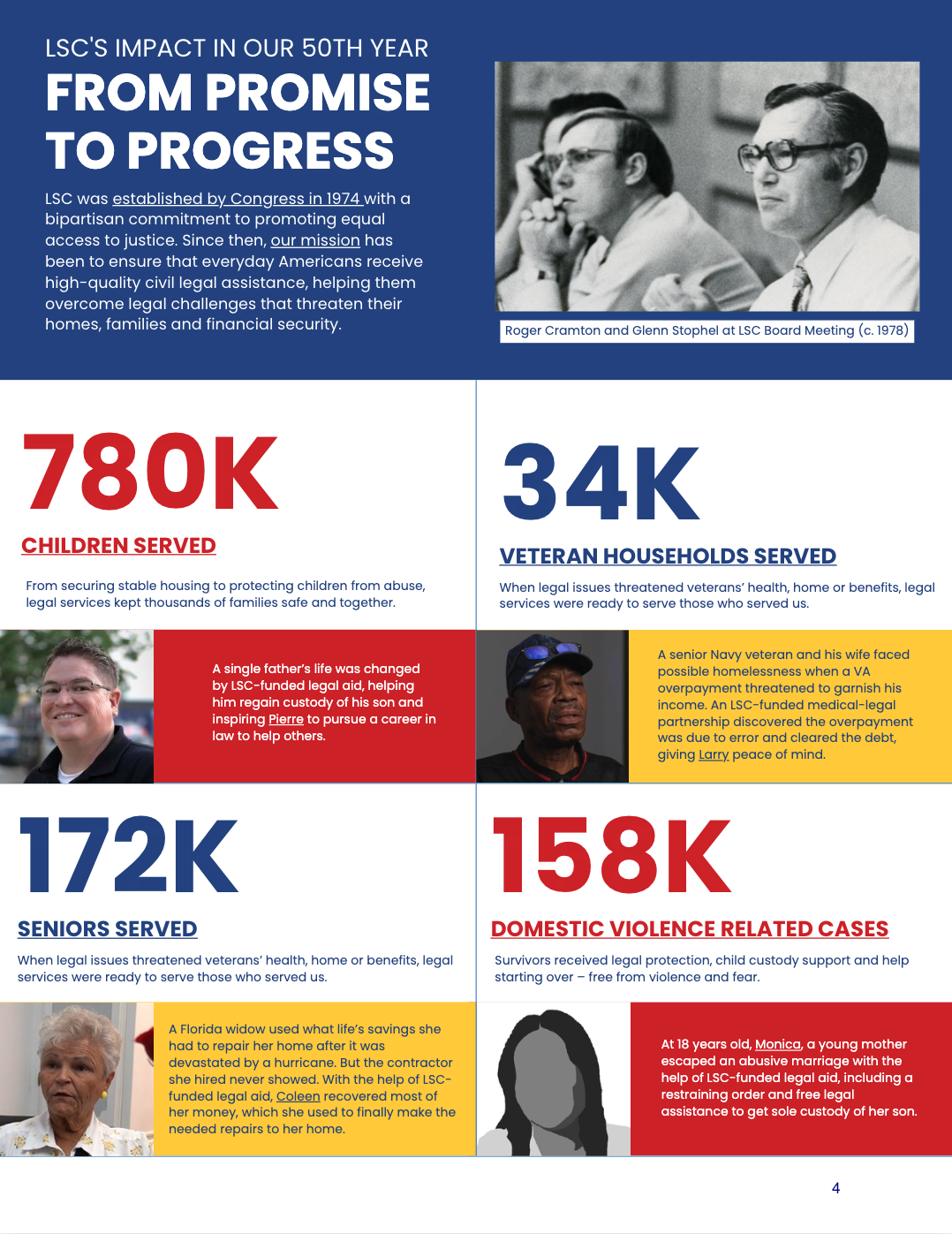
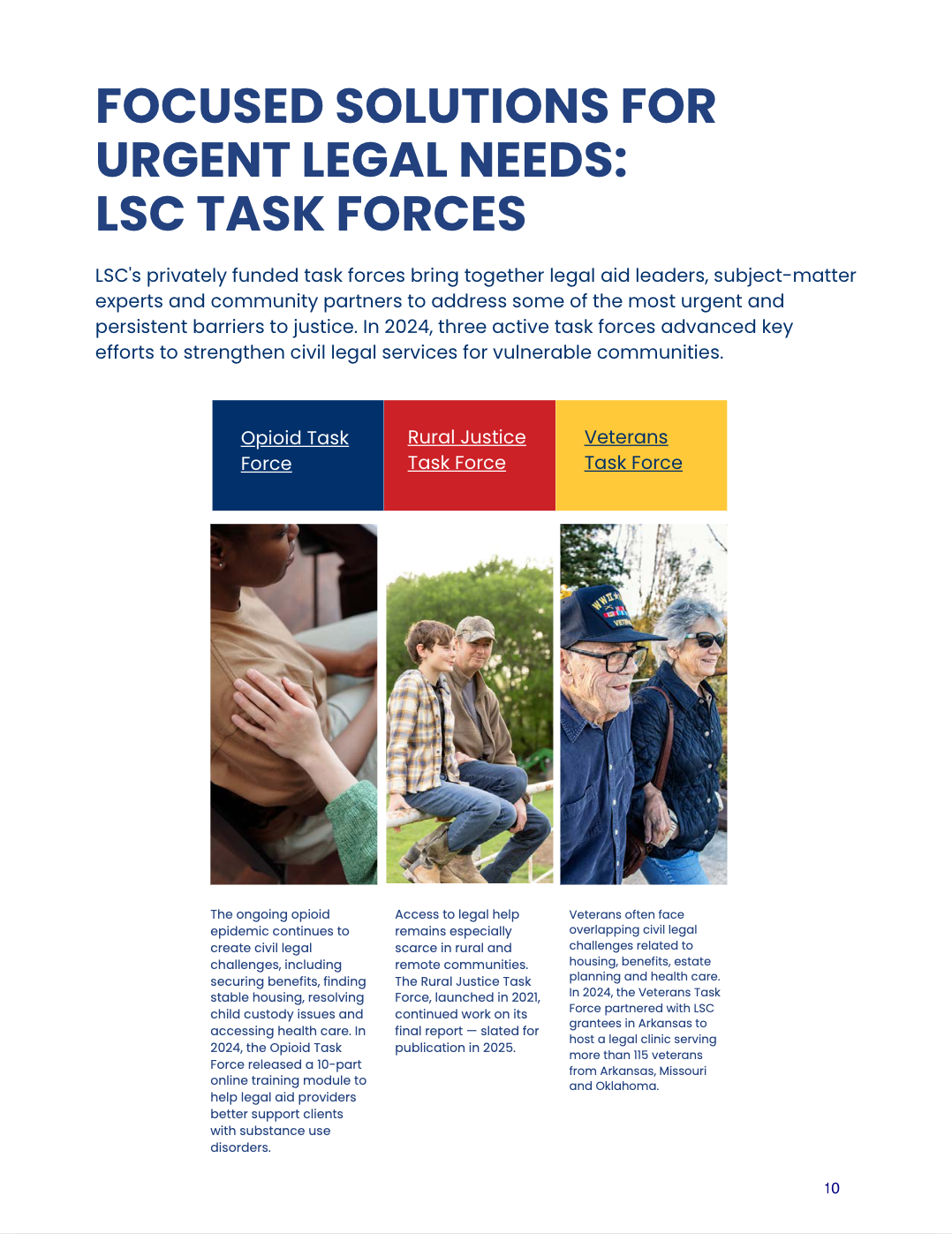
I developed and implemented a more intentional approach to imagery that prioritized people, authentic interactions, diverse communities, emotion, and everyday environments.
Where possible, the goal was to use photography connected to LSC’s grantees and the communities they serve. When stock photography was necessary, imagery was selected to feel consistent with the people and situations represented across LSC’s work.
Look for
- People
- Authentic interactions
- Diverse communities
- Emotions of hope, gratitude, and sometimes struggle
- Everyday environments
- Images connected to real experiences
Avoid
- Generic corporate imagery
- Empty institutional buildings
- Overly staged interactions
- Abstract representations of legal services
- Imagery that makes legal aid resemble corporate “big law”
CONSTRAINT
Evolving the experience without rebuilding the entire website.
The challenge was finding the highest-impact opportunities for web within the system we already had.
Redesign not in budget: A full LSC.gov redesign, including foundational changes to color and typography, was not feasible within the available budget.
Focused on high-impact changes: Identified opportunities where design and content improvements could meaningfully evolve the experience within the existing infrastructure.
More intentional visual storytelling: Introduced people-centered photography and iconography to make the brand feel more connected to its mission.
Clearer content hierarchy: Used custom components on core pages to make complex information more engaging and easier to navigate.
Brand evolution without a rebuild: Created meaningful visual change while working within LSC.gov’s established website system.

CONTENT DESIGN
Making complex information easier to navigate.
The visual refresh also created an opportunity to improve how information was presented.
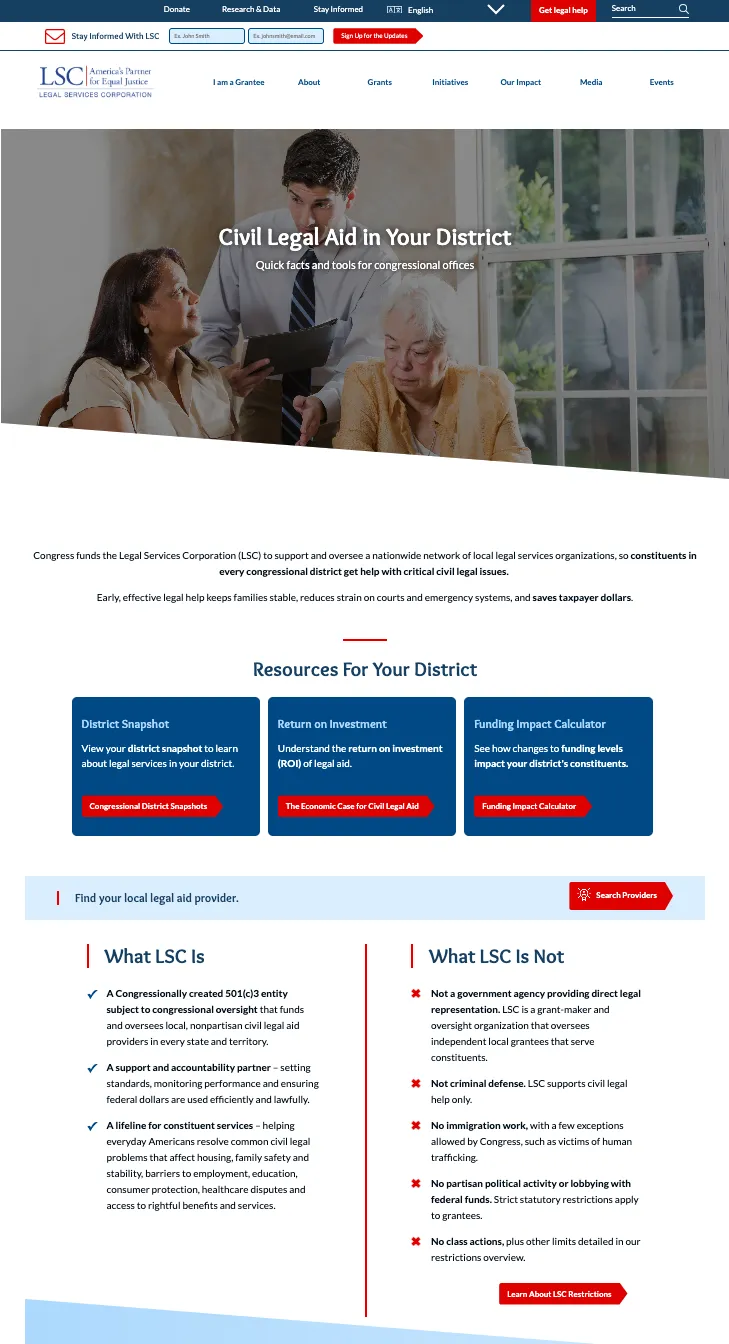
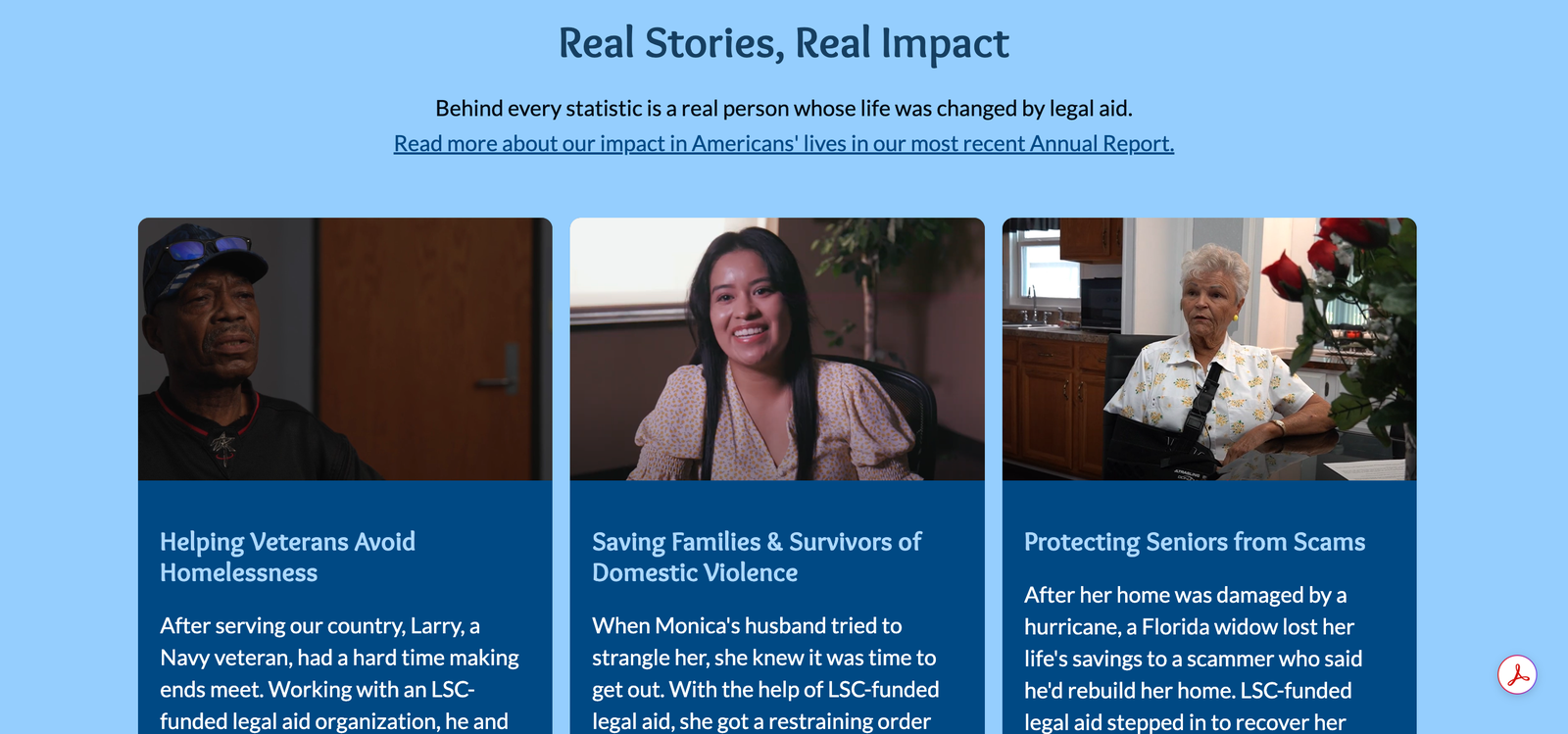
On high-priority pages, I used custom components, photography, iconography, and clearer content hierarchy to help users understand relationships between information, identify important content, and move through pages more naturally.
Rather than changing the underlying design system, these improvements focused on making better use of the tools available within it.
Content hierarchy
Headings, supporting information, imagery, and calls to action were structured to make complex pages easier to scan and understand.
Iconography
Visual cues helped differentiate information and improve page navigation.
Photography
Human-centered imagery connected institutional information back to the people and communities behind it.
BRAND GOVERNANCE
Making the change scalable.
A visual system only works if the people creating content understand it, can use it, and have the resources to apply it consistently.
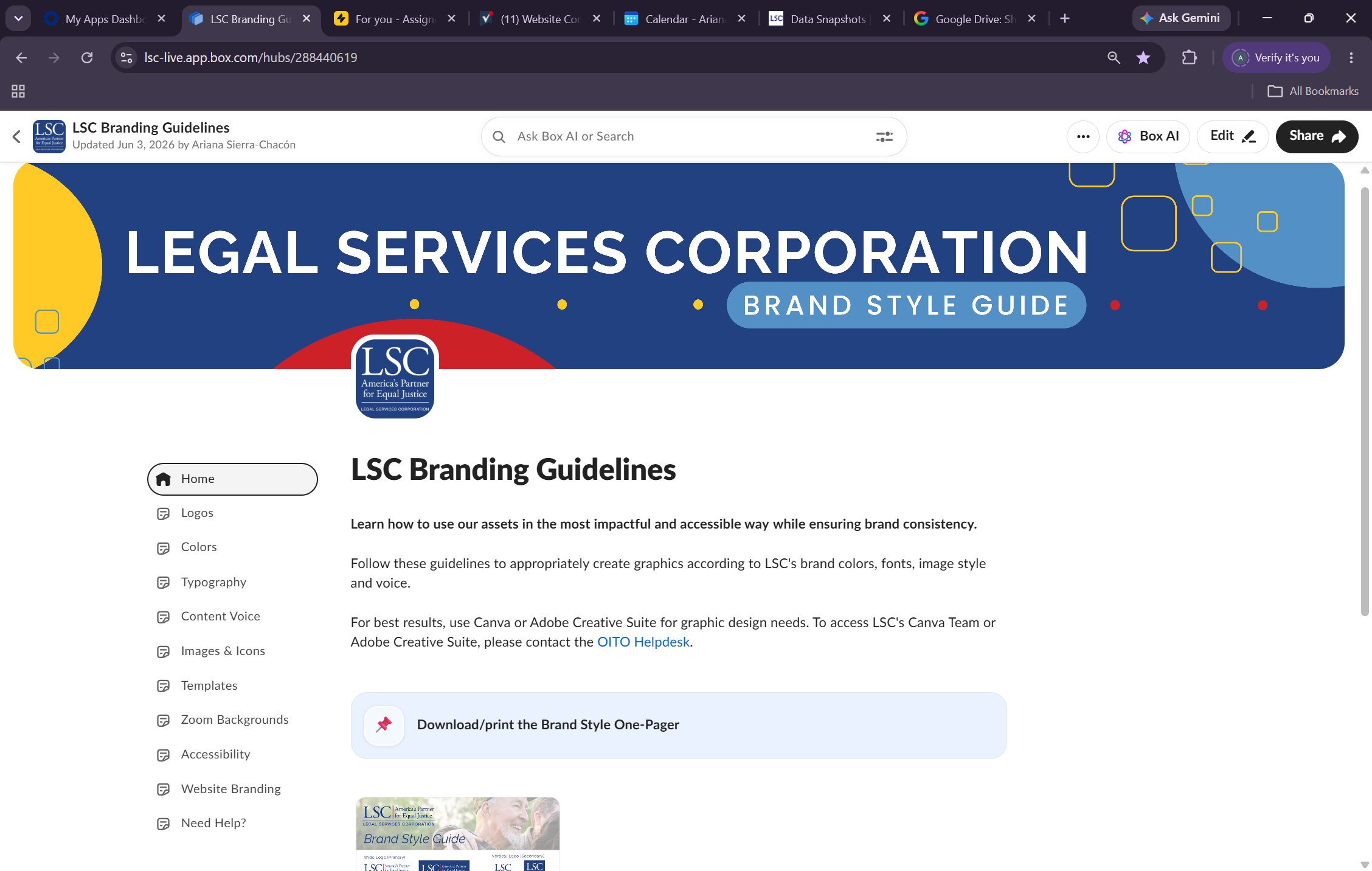
Brand guidelines and resources were built into a cohesive Box Hub that allowed content creators to find all assets, tools, and guidance in one place.
Gathered requirements
Met with content-producing teams to understand needs, workflows, channels, and existing pain points.
Introduced the direction
Shared the evolving visual approach with stakeholders and established common principles for how the brand should show up.
Implemented feedback
Translated staff feedback and recommendations into improvements to guidance, resources, and the broader system.
Built the toolkit
Centralized assets, templates, photography guidance, and standards in Box and Canva.
Launched + educated
Introduced the Branding Box Hub organization-wide and helped staff understand where resources lived and how to use them.
Governance turned the refresh from a visual direction into a shared organizational practice.
IMPACT
Building a system that works harder.
The refresh created a more cohesive digital system for communicating LSC’s mission. This made it easier to connect campaigns across channels, produce consistent content efficiently, and guide audiences from awareness on social media to deeper engagement on the website.
Brand recognition + mission clarity
Stronger brand recognition and mission clarity through a more consistent, people-centered visual identity that connects LSC’s work to the communities it serves.
Integrated campaign funnels
More integrated campaign funnels connecting social media storytelling and campaign creative to relevant web experiences, resources, data, and calls to action.
Content production efficiency
Greater efficiency across content production through reusable visual standards, photography guidance, templates, and brand resources that reduce one-off design decisions.
Cross-channel consistency
Greater consistency across channels by creating a shared visual language for web, social media, campaigns, reports, presentations, and organizational communications.
Scalable digital foundation
A scalable foundation for new digital experiences that allows campaigns and content initiatives to build on an established system rather than starting from scratch.
Content hierarchy
Stronger content hierarchy on priority web pages, helping complex information become easier to scan, understand, and connect back to LSC’s broader mission.
REFLECTION
Brand is experienced, not just seen.
This project reinforced that meaningful brand evolution requires the systems, governance, and collaboration that allow visual direction to become part of an organizational identity.
By grounding photography, content, and design choices in LSC’s mission, we created a more human and consistent experience across web, social media, campaigns, reports, and other touchpoints. Just as importantly, I worked across teams to translate that direction into practical standards, shared resources, and repeatable processes—while continuing to refine the system based on how teams actually used it.
The result was a brand that could evolve without losing consistency: rooted in mission, supported by governance, and flexible enough to work across channels, teams, and new digital experiences.
People Content Experience Trust
Learn how this content strategy became a foundation for creating a dedicated storytelling system for client narratives.